AI simplified – Explain it like I'm five (ELI5)
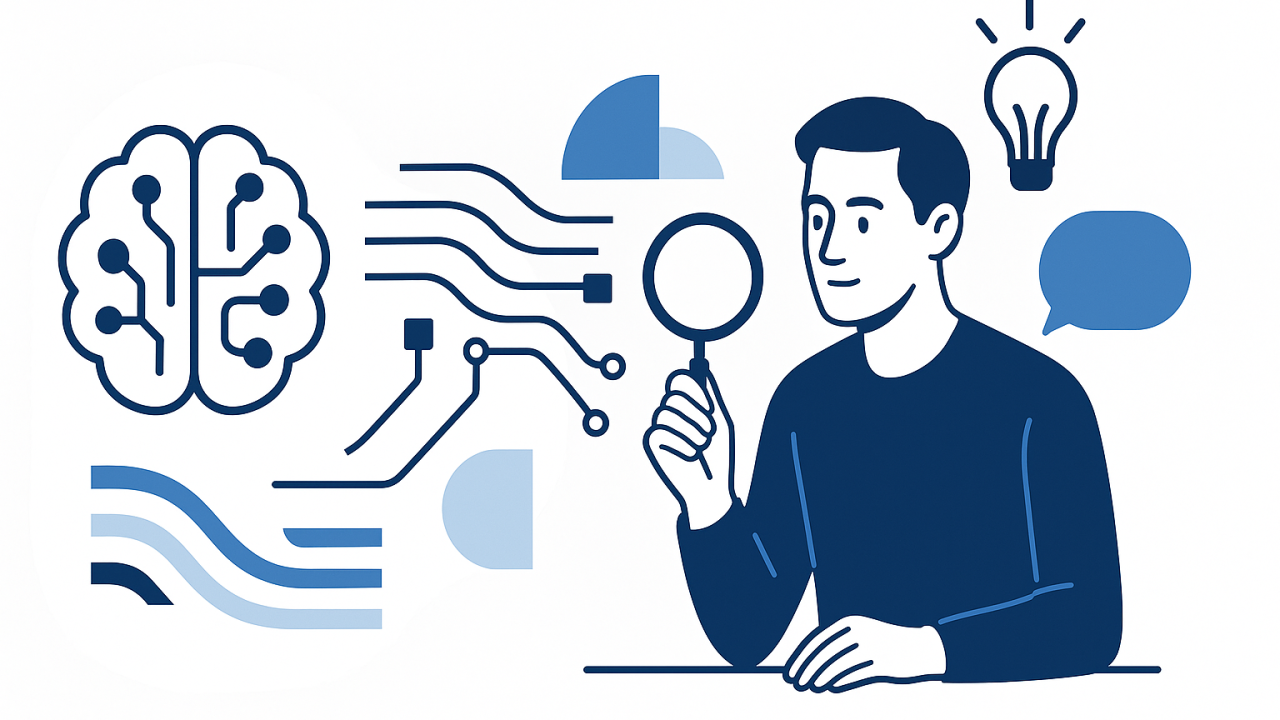
AI technology can sound complicated, complex, and highly technical, particularly for someone relatively new to AI. Using the "explain it like I'm five" approach, let's explore how these sophisticated AI systems can be explained and come to life within customer support scenarios with which we can all relate.
Your brain
Your brain is an incredible thing. When people talk to you, your brain is able to listen to their words and understand what they're saying or asking for. Depending on their tone or the words they use, you can usually tell if they're happy, worried, sad, or angry; and you might respond differently depending on their emotions. You use the memory you've collected – from all the things you've learned from reading books, watching videos, and previous experiences – to respond and help them. You might even write something down, draw a picture, or suggest they check out a helpful resource. What if the conversation started well but they eventually became irritated? You might try to calm down the situation and suggest the two of you speak with someone else who might offer a second opinion or know more. And afterwards, you might replay the conversation in your head to learn what worked well, what didn't work well, and how to be better next time.
AI works the same way.
Introducing Sam
Sam is a really smart guy who works at a company's help desk. He never gets tired, never gets grumpy, and he's always ready to help customers. Here's the twist: Sam isn't actually a person at all. Instead, Sam is an AI support agent, a computer program trained to help and talk to people much like a human.
When you send a message saying "My internet isn't working and I'm really frustrated because I have a school paper due tomorrow," something fascinating happens inside Sam's digital brain. He uses Natural Language Processing (NLP) to understand and interact with humans, even when you're typing fast, using the wrong words, or making mistakes. Think of NLP as Sam's universal translator that helps him decode human language in all its messy, imperfect glory. But Sam goes deeper than just reading words. He's equipped with sentiment analysis to understand the emotions behind your words. When someone writes "This is the WORST service ever!!!" Sam understands that person is really frustrated and unhappy and should be approached with extra care and understanding.
Sam's learning journey and super-smart brain
How did Sam get so smart? Imagine if he went to a giant school where he read millions of conversations and books to learn how people talk and what kinds of problems they have. That learning process is called Machine Learning (ML), and it's how Sam was trained to know what to say and do.
Sam's brain is built on what we call a Large Language Model (LLM), which works like a really big dictionary that gives him words in lots of different languages and helps him communicate with you in ways you'll understand. Sam doesn't remember things the way you or I do. Instead of keeping everything in his head, he has a whole shelf of special notebooks called vector stores where helpful information is kept organized and easy to find. Each notebook holds different kinds of helpful information, such as one for fixing things, one for past conversations, and even one for explaining how new gadgets work. When someone asks him a question, Sam uses a clever trick called Retrieval-Augmented Generation (RAG) to search through all those notebooks and find the best pieces of information. It's like Sam has a bunch of smart brains working together: one for understanding people, one for flipping through his notebooks, and one for figuring out how to respond in the best possible way.
The coolest part? Sam can talk back and create things just like a human. He doesn't just repeat pre-prepared answers. Sam uses Generative AI (GenAI) to write brand-new responses for each person's special situation. And he can instantly create all sorts of summaries, documents, and possibly even images for other people to use.
Let's pretend a human named Maria writes: "I'm trying to set up my smart thermostat but I'm not tech-savvy and worried I'll break something." Sam understands that Maria needs help setting up a smart thermostat, though he doesn't yet know what brand or which model. He understands that Maria doesn't consider herself very good with technology, so she might not use the correct words and feels worried about breaking something. A previous version of Sam might have responded with a pre-set list of questions or a link to a generic setup guide that not only didn't help Maria but instead made her even less confident. But not this Sam. This Sam is really smart and designed to make Maria feel safe and confident that she has someone to help her each step of the way. Using everything he figured out, Sam responds with: "Hi Maria! I completely understand that feeling. New technology can sometimes be scary. Let's take this step by step, together. What brand of thermostat are you working with?"
The magic of teamwork
Sam's superpower isn't just interacting with customers, though he's really good and fast at it. His real strength is how he helps his company and fellow human agents. The best magic happens when Sam and human agents work together like a team. Think of Sam as the ultimate behind-the-scenes teammate who sets everyone up for success.
When Sam's emotional radar detects an angry customer, he doesn't just move them to the front of the line for additional help. He writes helpful notes for the human agent with ideas about what to do. For example, Sam might privately tell the human agent: "This customer has been troubleshooting internet issues for three hours with a school paper due tomorrow. They're stressed about the deadline, not just the technical problem. We tried standard troubleshooting and the following potential solutions, but nothing worked. Maybe start by acknowledging their time pressure and offer a quick temporary solution while you work on the main fix."
Simple problems such as password resets? Sam can resolve those in less than a minute. But for complex problems, such as when someone has a billing problem, he might hand-off to a human agent with the message: "Here's what happened… They had a special rate that expired in January, but they said they didn't know it was only temporary. They want to know if we can keep the low price a little longer and give back the extra money they paid. They also mentioned moving to a new apartment last month, so they might qualify for our relocation discount instead." By the time Jake says hello, he already knows the whole situation and how to help.
Sometimes customers don't realize they're being helped through this amazing teamwork. The human agent can focus on what they do best – expertise and relationship building – because Sam has handled all the background research and preparation.
In summary
Sam's language processing (NLP) reads your messages, his emotional radar (sentiment analysis) interprets how you're feeling, and he uses information from his organized notebooks (vector stores, using RAG) to find just the right details with which he was trained (ML). Then, his creative abilities (GenAI) craft personalized responses and suggestions to help answer your questions and solve problems — all in a matter of seconds.
And that's how AI works: different components working together, just like your brain.