Every feature has a cost
As product managers, we’re under constant pressure to deliver more, faster.
Stakeholders want to see momentum.
Customers ask for new capabilities.
Roadmaps need to show visible progress.
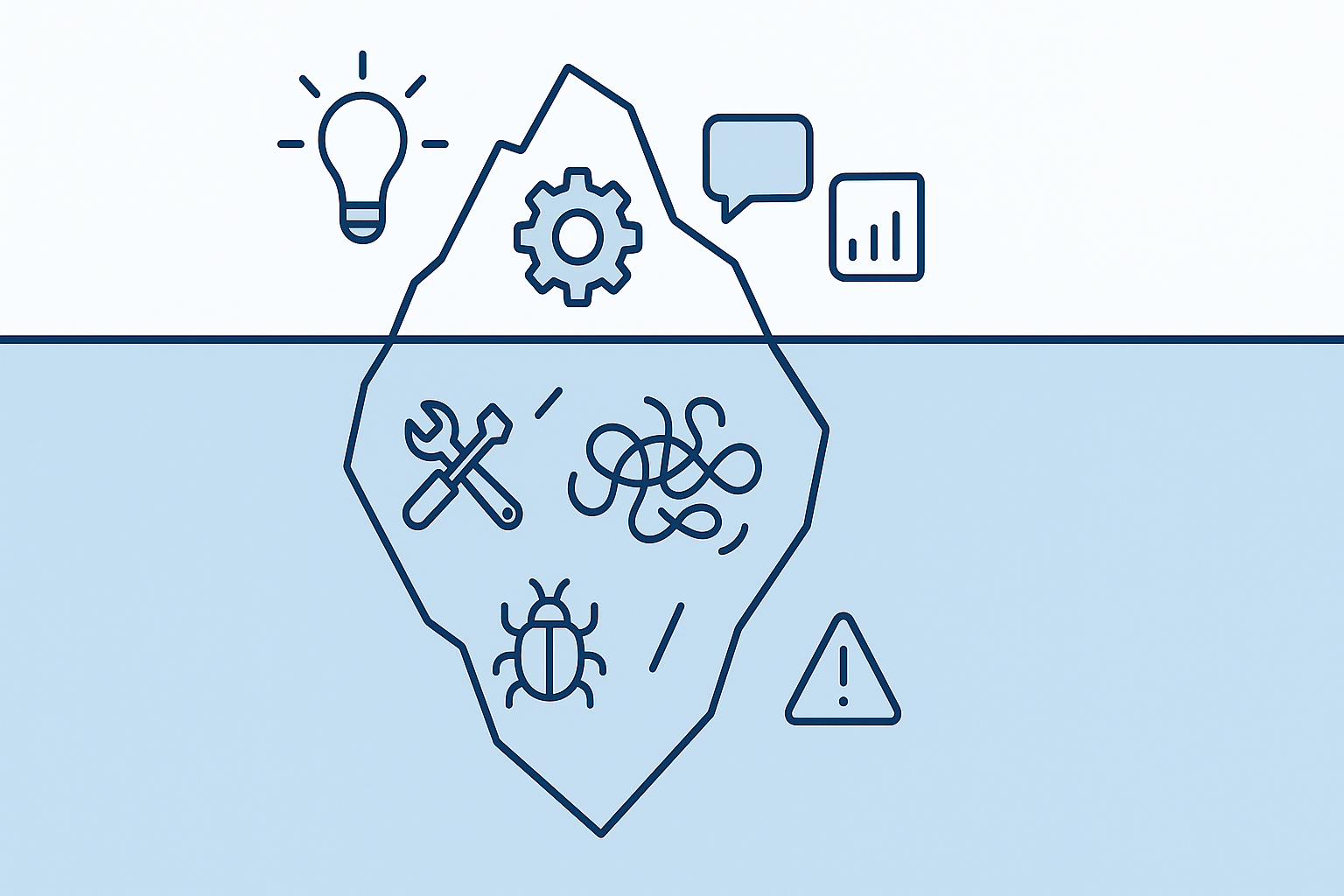
We add features for many reasons. Maybe they’re important to the market. Maybe they’re important to a specific customer or stakeholder. Maybe they’re needed to match a competitor. But there’s a hidden cost we rarely acknowledge: Every feature you add has a cost.
1. Features require upfront investment
Most product managers know that no feature comes for free — not even the small ones.
Every feature burns real currency:
Valuable time and currency with stakeholders
Engineering time to design and develop
QA hours to test, find edge cases, and maintain quality
Documentation to update
Administrative time writing, updating, and tracking epics and stories
PM attention, pulled away from strategy, discovery, or go-to-market work
And when you add up all the time and resources — across stakeholders, engineering, QA, documentation, training — even the smallest feature can cost the organization a surprising amount of money.
2. Shipping is just the beginning
We often treat feature launch like the finish line — celebrate success, reminisce about the trials and tribulations to get there. But it’s not the end; it’s just the starting point.
Shipping a feature doesn’t end the work; it begins a new phase of responsibility. From the moment it’s live, that feature becomes part of the product’s surface area which must be maintained. And once you add that feature and customers begin using it, it can be difficult to remove or replace in the future.
Over time, every feature adds:
More code to maintain and refactor
More potential for bugs and regressions
More edge cases for QA to test
More complexity for new teammates to learn
More decisions for future PMs to consider and preserve
The overhead builds slowly, and the true cost compounds over time. One day you realize your team is spending more time maintaining the past than building the future. The product gets heavier, and your team gets a little bit slower.
3. Every “yes” hides a “no”
Many of us are familiar with these common complaints from customers and Sales:
Why do you keep adding new features instead of fixing what’s broken?
Why did you spend six months on [feature] instead of delivering [five or six frequently requested features]?
[Company] says they want to migrate but they won’t until you support [feature] like [competitor].
When you commit to a new feature, you’re choosing not to invest that time, focus, and energy elsewhere — even if you don’t say it out loud.
You might be saying no to:
Improving the core experience
Fixing a frustrating bug
Paying down tech debt
Moving forward with a feature that delivers more long-term value
Giving the team breathing room to think ahead
Unlike direct costs, opportunity cost may not be visible in Jira or roadmaps. But it’s always there, quietly compounding behind every feature decision.
Conclusion: Build like every feature is debt
Every feature is a commitment:
A short-term investment in something new
A long-term responsibility to maintain and support it
A strategic trade-off that means not investing in something else
Treat every feature like you’re borrowing against the future. Weigh the benefits with the cost, make explicit trade-offs, ask hard questions before you say yes, and spend your resources wisely.
The art of product management is not just about building things; it’s about balancing market and stakeholder demands with the set of capabilities and features at any given time that provide actual, tangible value.
Build accordingly.