How to Work with “Difficult” Team Members
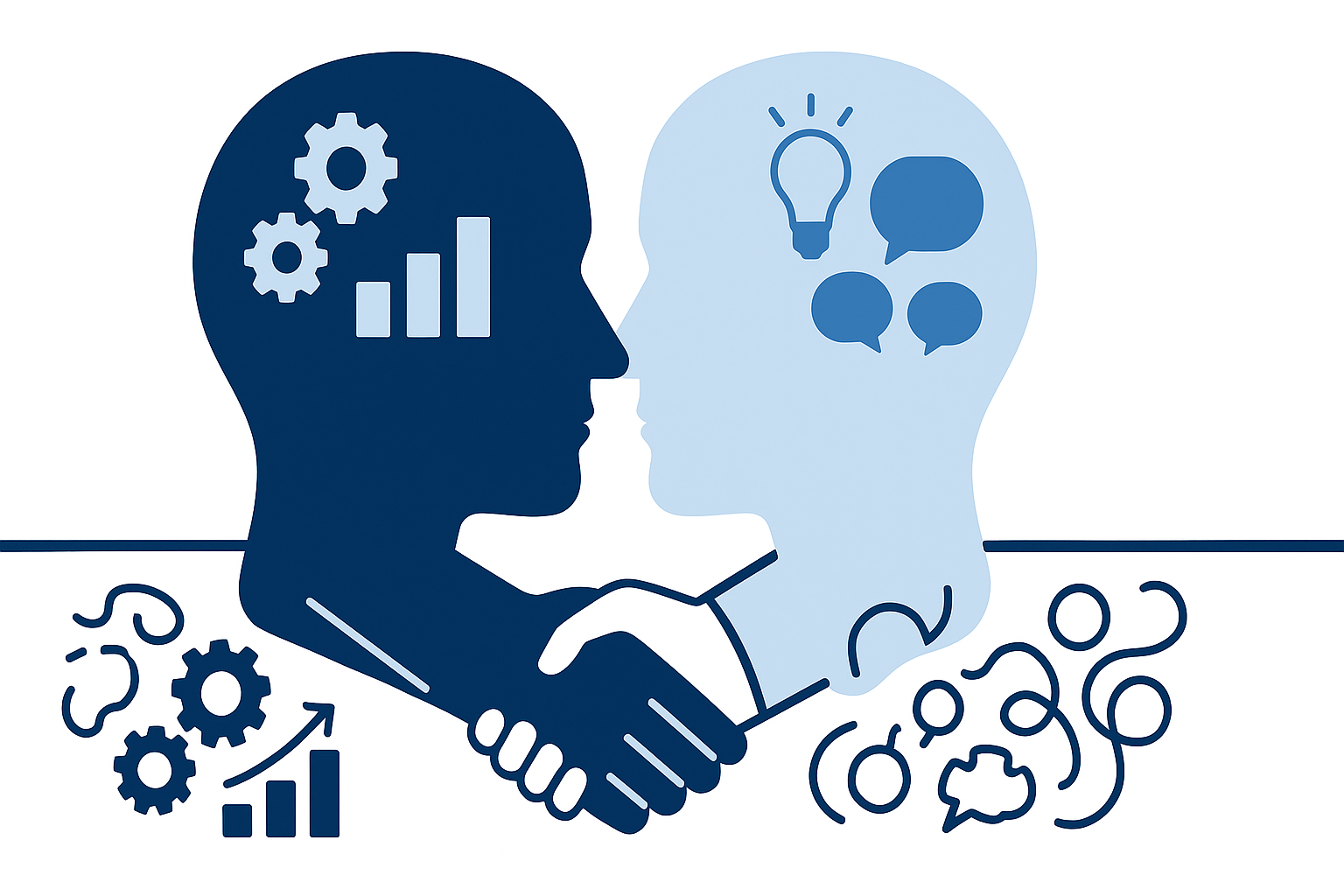
Over the years, I’ve worked with all kinds of people — across teams, roles, and temperaments.
One question I hear often is:
“How do you work with difficult team members?”
You’ve probably heard a version of it, too:
“I just can’t work with [insert name]. They’re too difficult.”
In my experience, that framing is often unhelpful. Labeling someone as “difficult” short-circuits any effort to understand them. Worse, when we share that label with others, we invite them to adopt the same view, shaping how people see and interact with that person, often unfairly. That kind of bias spreads fast, and no one comes out a winner.
It’s far more productive to flip the question.
Instead of asking, “How do I work with difficult people?”
Ask, “How can I get better at working with anyone?”
The truth is we’re all different:
We communicate differently.
We approach problems from different angles.
We’re shaped by different experiences, incentives, and ways of thinking.
Those differences can cause friction, but they don’t have to create dysfunction.
Here’s how I try to work through it.
Understand their environment
While most teams are aligned around broad company goals, they’re often driven by different metrics, incentives, and definitions of success.
Sales and marketing teams are focused on leads and quotas.
Product delivery is measured by competitive advantage and adoption.
Support teams are held to SLAs and CSAT scores.
Even within the same company, teams may be optimizing for very different outcomes.
What feels like resistance might simply be someone trying to meet the expectations placed on them.
Team cultures also vary widely.
One team might prize openness and collaboration, while another emphasizes urgency and individual results.
Often, these cultural differences are reinforced — intentionally or not — by leadership.
Our focus and behavior can be driven by how we’re measured and rewarded.
If someone seems “difficult,” start by asking:
“What are they responding to?”
“What pressures are shaping their behavior?”
Understand their position
Sometimes, difficult behavior is a symptom of stress or frustration, not intention.
They might be under pressure to deliver results, even when the path forward is unclear or unreasonable.
They might be overwhelmed or burned out.
They might feel unheard, undervalued, or not respected.
They don’t trust the process (or you) yet.
They may be generally unhappy in their role, stuck in a role that doesn’t align with how they work best or what they enjoy.
Trust is the foundation of effective collaboration. Sometimes, it’s freely given based on a person’s reputation or a history of success; and it would be great if that was always the case. However, in most cases, trust is earned slowly through follow-through, empathy, and shared success.
When people feel threatened, they may react by asserting more control or resisting change altogether.
Rather than responding to the behavior alone, try to understand what’s driving it.
Is it fear? Uncertainty? A lack of trust in the process or in you?
Seek to understand their personality
We all bring different styles and temperaments to our work.
One person’s “directness” may come across as blunt or abrasive.
Another’s collaborative approach might seem slow or indecisive.
What feels efficient to you might feel rushed to them.
None of these styles are inherently better or worse.
In fact, those very differences may have led a person to be successful in their respective role, team, or domain.
Sometimes, what appears as defensiveness is really fear — of being wrong, of losing credibility, or of no longer being seen as the expert. That fear is human, too.
At other times, what appears as resistance or defensiveness may stem from fear of being wrong or losing influence, of not being seen as the leading voice that’s always right.
Acknowledge that complementary styles, when acknowledged and balanced, can lead to better outcomes.
One person might think quickly on their feet, while another is more methodical.
One may excel at verbal communication; another might be stronger with written or visual thinking.
Finding ways to blend your own strengths with the passion and strengths of others can not only build trust but also shared success.
Remember that we’re all human having a human experience
We rarely know what someone else is carrying.
They might be grieving, experiencing illness, or caring for someone who is.
They might be going through a divorce or navigating personal loss or challenges.
They might be under immense pressure to deliver the impossible.
We all have blind spots, baggage, and bad days.
And sometimes, without realizing it, we are the one being difficult in their eyes.
Taking action
Too often, we fill in the blanks with our own assumptions about someone’s motivations or working style, especially if their approach makes us feel defensive or unheard.
Approaching them directly, with curiosity and openness, can help us better understand what’s really going on, reducing the risks that come with guessing and assumptions.
You don’t need to know everyone’s story to practice empathy.
A little patience and grace can go a long way, regardless of whether it’s offered in return.
Rather than expecting others to operate like us, or how we wish they would, focus on identifying common goals and how to move forward, together.
And always remember: people may forget what was said or done in the moment, but they’ll remember how you made them feel. That’s true for the so-called “difficult” ones and for those who choose to build trust, bridge gaps, and create shared success.